
In one of my coaching sessions, a client began sharing personal experiences. He described them as a series of failures, from the minor to the life-altering, that, over time, had shaped a self-image of someone who was simply “not capable.”
As I listened, I could see something else entirely.
I saw a person with a vast range of strengths and abilities. Someone who had simply become accustomed to viewing himself through a lens of self-criticism and self-negation.
When we took a step back to look at those same experiences, separating the facts from the interpretations and emotions, a different picture began to emerge:
𝗔 𝗹𝗶𝘀𝘁 𝗼𝗳 𝗰𝗮𝗽𝗮𝗰𝗶𝘁𝗶𝗲𝘀 𝘁𝗵𝗮𝘁 𝗵𝗮𝗱 𝗯𝗲𝗲𝗻 𝘁𝗵𝗲𝗿𝗲 𝗮𝗹𝗹 𝗮𝗹𝗼𝗻𝗴, 𝗯𝘂𝘁 𝗵𝗮𝗱 𝗻𝗲𝘃𝗲𝗿 𝗯𝗲𝗲𝗻 𝗴𝗶𝘃𝗲𝗻 𝗮 𝗻𝗮𝗺𝗲 𝗼𝗿 𝘁𝗵𝗲𝗶𝗿 𝗽𝗿𝗼𝗽𝗲𝗿 𝗽𝗹𝗮𝗰𝗲.
This is not an isolated case.
I see this time and again, people defining themselves by what didn't work, while overlooking the immense resources already present within them.
In many cases, what we experience as a weakness is not evidence of a lack of ability.
𝗠𝗼𝗿𝗲 𝗼𝗳𝘁𝗲𝗻, 𝗶𝘁 𝗶𝘀 𝗮 𝘀𝘁𝗿𝗲𝗻𝗴𝘁𝗵 𝘁𝗵𝗮𝘁 𝘄𝗮𝘀 𝗻𝗲𝘃𝗲𝗿 𝗽𝗿𝗼𝗽𝗲𝗿𝗹𝘆 𝘂𝗻𝗱𝗲𝗿𝘀𝘁𝗼𝗼𝗱, 𝗴𝘂𝗶𝗱𝗲𝗱, 𝗼𝗿 𝗺𝗮𝗻𝗮𝗴𝗲𝗱.
We might look at our own traits and think:
“If I were not so sensitive, things wouldn't get to me so much.”
Or we encounter our perfectionism - holding ourselves to flawless standards, striving to eliminate every possible mistake, and finding ourselves caught in an exhausting attempt to prevent any future failure.
But when we look beyond the struggle, a broader perspective becomes available:
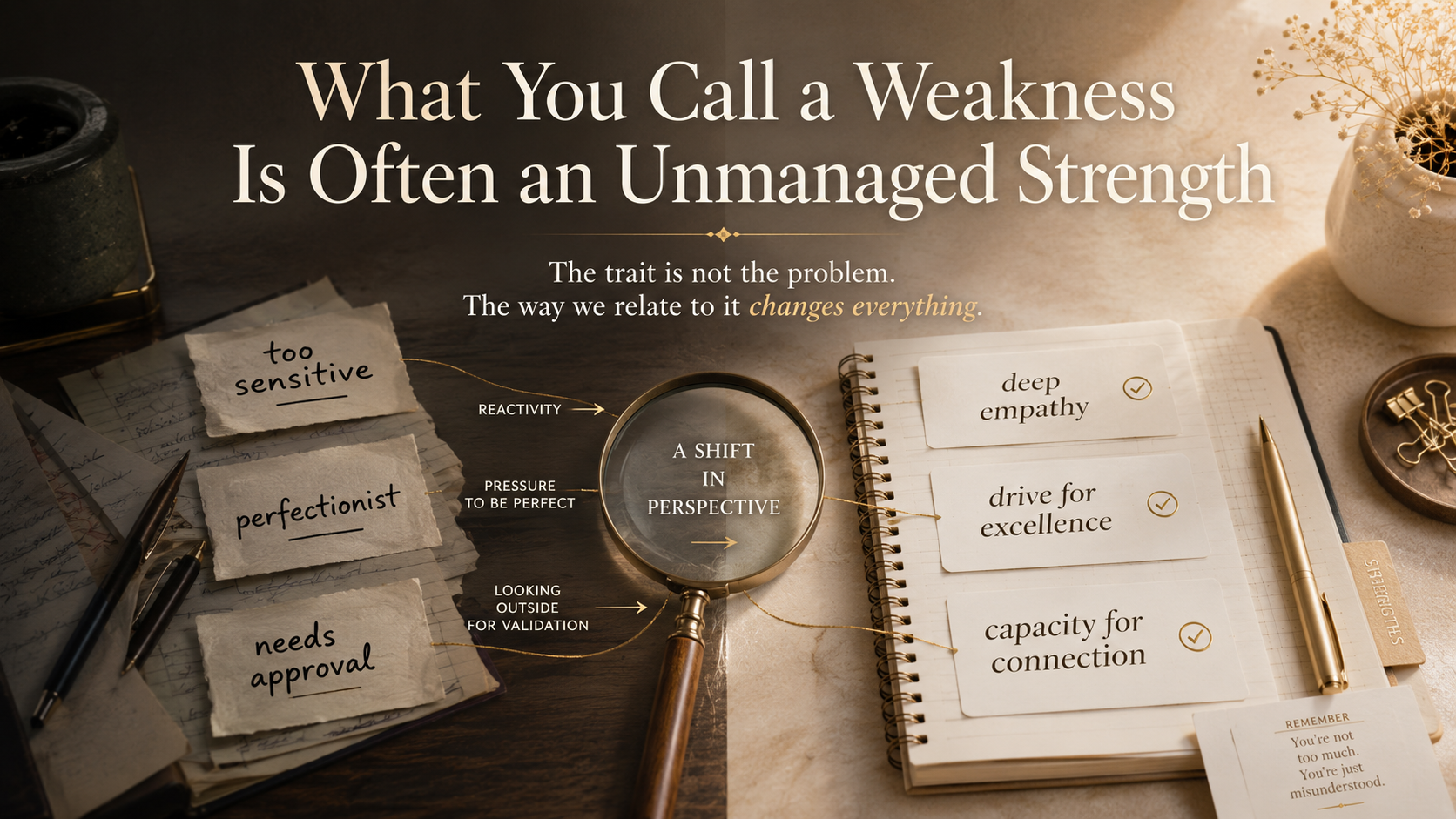
𝗦𝗲𝗻𝘀𝗶𝘁𝗶𝘃𝗶𝘁𝘆 is not only a source of vulnerability. It is also the ability to notice nuance, to understand others deeply, and to perceive what most people miss.
𝗣𝗲𝗿𝗳𝗲𝗰𝘁𝗶𝗼𝗻𝗶𝘀𝗺 is not only an obstacle. It often reflects high standards, personal accountability, and a deep commitment to excellence.
The trait itself is not the problem -it simply exists.
The challenge lies in how we interpret it and how we relate to it.
𝗪𝗵𝗲𝗻 𝗮 𝘁𝗿𝗮𝗶𝘁 𝗶𝘀 𝗹𝗮𝗯𝗲𝗹𝗲𝗱 𝗮𝘀 𝗻𝗲𝗴𝗮𝘁𝗶𝘃𝗲, 𝘄𝗲 𝗯𝘂𝗶𝗹𝗱 𝗽𝗮𝘁𝘁𝗲𝗿𝗻𝘀 𝘁𝗵𝗮𝘁 𝗿𝗲𝗶𝗻𝗳𝗼𝗿𝗰𝗲 𝘁𝗵𝗮𝘁 𝗯𝗲𝗹𝗶𝗲𝗳 - 𝗮𝗻𝗱 𝘁𝗵𝗼𝘀𝗲 𝗽𝗮𝘁𝘁𝗲𝗿𝗻𝘀 𝗲𝘃𝗲𝗻𝘁𝘂𝗮𝗹𝗹𝘆 𝘀𝗵𝗮𝗽𝗲 𝗼𝘂𝗿 𝗿𝗲𝗮𝗹𝗶𝘁𝘆.
But when we pause and separate the trait from the judgment attached to it, a new possibility opens up: the ability to work with that trait in a more intentional and effective way.
True change does not begin when we try to become someone else.
𝗜𝘁 𝗯𝗲𝗴𝗶𝗻𝘀 𝘄𝗵𝗲𝗻 𝘄𝗲 𝘀𝘁𝗼𝗽 𝗿𝗲𝘀𝗶𝘀𝘁𝗶𝗻𝗴 𝘄𝗵𝗼 𝘄𝗲 𝗮𝗿𝗲 𝗮𝗻𝗱 𝘀𝘁𝗮𝗿𝘁 𝘄𝗼𝗿𝗸𝗶𝗻𝗴 𝘄𝗶𝘁𝗵 𝘄𝗵𝗮𝘁 𝗶𝘀 𝗮𝗹𝗿𝗲𝗮𝗱𝘆 𝘁𝗵𝗲𝗿𝗲.
From that place, everything begins to shift:
✅ Sensitivity transforms into deep empathy.
✅ Perfectionism becomes a drive for excellence and responsibility.
✅ The need for approval reveals a capacity for meaningful human connection.
Personal growth does not start by trying to fix yourself. It starts with understanding and learning to manage the capabilities you already possess.
𝗥𝗲𝗮𝗹 𝘀𝘁𝗿𝗲𝗻𝗴𝘁𝗵 𝗰𝗼𝗺𝗲𝘀 𝘄𝗵𝗲𝗻 𝘄𝗲 𝘀𝘁𝗼𝗽 𝘁𝗿𝘆𝗶𝗻𝗴 𝘁𝗼 𝗳𝗶𝗹𝗹 𝗮 𝘀𝗽𝗮𝗰𝗲 𝘁𝗵𝗮𝘁 𝗶𝘀𝗻'𝘁 𝗼𝘂𝗿𝘀. 𝗬𝗼𝘂𝗿 𝗼𝘄𝗻 𝘀𝗽𝗮𝗰𝗲 𝗶𝘀 𝘁𝗵𝗲 𝗼𝗻𝗹𝘆 𝗽𝗹𝗮𝗰𝗲 𝘄𝗵𝗲𝗿𝗲 𝘆𝗼𝘂 𝗰𝗮𝗻 𝘁𝗿𝘂𝗹𝘆 𝗴𝗿𝗼𝘄.
𝗔 𝗦𝗲𝗹𝗳-𝗥𝗲𝗳𝗹𝗲𝗰𝘁𝗶𝗼𝗻 𝗠𝗼𝗺𝗲𝗻𝘁
Take a moment today to think about a trait you usually define as a "weakness."
✅If you were to strip away the judgment and the criticism, what hidden strength would you discover there?
✅How might that trait serve you if you gave it a name and its proper place?
